Making automated mobility work safely at scale
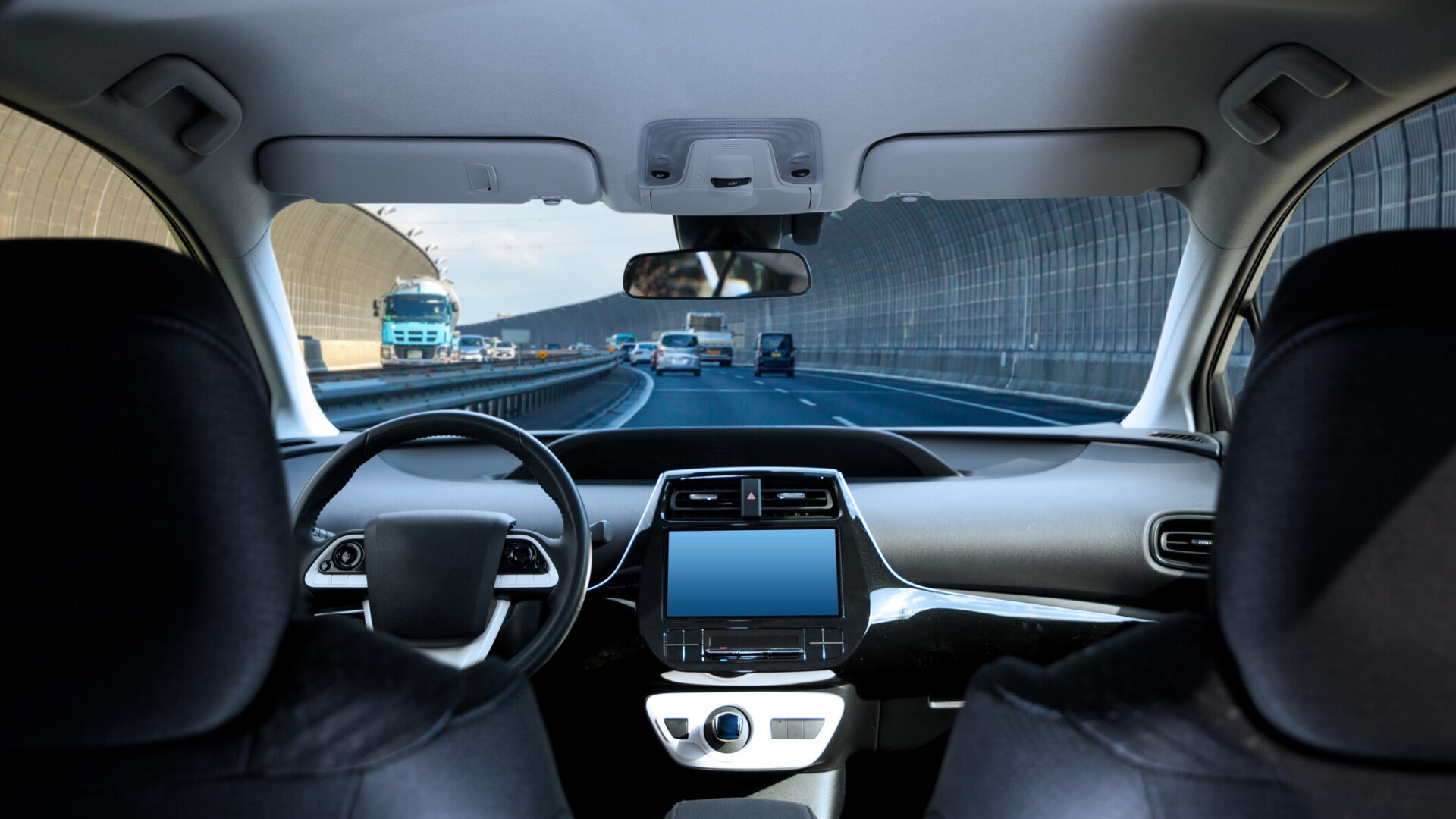
Olaf Op den Camp, senior consultant at TNO and an expert in safety assessment for automated mobility, will speak on national research initiatives at the Korea-Netherlands Joint Conference ‘Smart Mobility for Future Transportation’ in Gangneung on 20 October. Ahead of the event – hosted by the Province of North Brabant, TNO and ITS Korea – he discusses the technologies shaping smart mobility, the challenge of scaling them safely, and the opportunities for Dutch-Korean collaboration.
What is happening around national research initiatives for smart mobility in the Netherlands?
A major focus now is on scaling up automated mobility and looking at how technology can help us make better – and safer – use of our roads and vehicles, particularly given our levels of traffic and congestion in the Netherlands. Of course, we very much work within the wider European research and innovation agenda.
One initiative we’re working on – with support from the Dutch government – focuses on higher levels of automation, particularly for public transport and transport services. This is linked to the initiative to have large scale demonstrations of CCAM (Connected, Cooperative and Automated Mobility) under the EU programme Horizon Europe, which is focused on developing and deploying connected, cooperative and automated mobility. The EU-wide initiative is expected to start in 2027 and run for four years, with different use cases across Europe.
At TNO, we’ve also started a programme with RDW (Netherlands Vehicle Authority) and the Dutch Ministry of Transport to transfer TNO’s knowledge of safety assessment into government institutions. The aim is to establish a practical, feasible and fair safety assessment framework that supports the safe and responsible introduction of automated vehicles on Dutch roads.
What developments do you see shaping smart mobility at the moment?
One of the biggest changes globally is the move towards software-defined vehicles. To understand this, think of a vehicle almost as a smartphone on wheels, receiving software updates that add new functionality and automation.
AI is another major development. Over the past couple of years, we’ve seen it playing a bigger role at many different levels, from controlling the vehicle itself to fleet and traffic management. AI is definitely here to stay, but with it comes some challenges for safety. For example, it’s difficult to prove exactly how an AI-based system will respond in every possible situation. Traffic environments are constantly changing, including through the introduction of new types of mobility. If an AI system hasn’t been trained for a particular situation, we don’t necessarily know how it will respond. That makes robust approaches to safety verification increasingly important.
What role are research and innovation playing in moving smart mobility forward?
Research allows us to investigate emerging technological trends and, crucially, establish how we can determine safety under different circumstances. One of the approaches we use is scenario-based analysis, where we take characteristics of Dutch infrastructure, traffic behaviour, culture and traffic rules and translate these into scenarios. Manufacturers and authorities can then use those scenarios for requirements setting and to test and validate automated systems.
Ultimately, responsibility sits with both manufacturers and authorities. Manufacturers need to demonstrate that the vehicles they introduce are safe to use, while governments and authorities have a responsibility to make sure that only safe vehicles are allowed onto the road. International harmonisation of the concepts and methods used to make those assessments is therefore an important part of our work.
Where do you see the biggest opportunities and challenges as smart mobility moves towards wider real-world application?
For me, the biggest opportunity is making mobility accessible to everybody, regardless of age, vulnerability or wealth.
The big challenge is scaling up. There are already many projects around the world looking at automation but moving from individual projects towards widespread deployment means bringing many different stakeholders together. That can include governments, fleet owners, service providers and organisations responsible for roads, infrastructure, communications and traffic management. Each has its own agenda and responsibilities, and getting all those parties aligned can be difficult.
At the same time, we need to show that these technologies provide a genuine benefit to society. It’s not simply a question of whether the technology works or not.
Where do you see the greatest opportunities for the Netherlands and Korea to work together?
AI and safety assessment are two clear areas. Both our countries refer to the United Nations Economic Commission for Europe (UNECE) guidelines for vehicle approvals through scenario-based approaches. The Netherlands has experience to share around our scenario-based safety framework, while we can learn from Korea’s speed of implementation.
There are also similarities to our ecosystems and the way they approach technology. The Brabant ecosystem is particularly relevant here, with government, research organisations and companies working together. There are strong parallels with Korea in this regard.
Both our countries are focused on getting technology into practical use in society, so there’s a lot we can learn from each other. This gives us a good basis for collaboration, not only between researchers but also between government and business.
Looking further ahead, what would you most like to see develop in smart mobility over the next few years?
The most important thing is to move beyond technology development and individual demonstrations towards solutions that can work safely at scale.
That requires collaboration across organisations and borders. Much of what we do in the Netherlands already aligns with European programmes, and the Netherlands plays a prominent role in efforts to harmonise approaches across Europe.
If automated mobility is going to operate at scale, that international alignment will be essential. Vehicles and technologies don’t exist in isolation, so we need shared approaches to assessing safety and putting them into practice.