Korea-Netherlands: ‘samenwerken’ and the future of smart mobility
Safer roads, cleaner transport, and accessible mobility for ageing societies are challenges that Korea and the Netherlands share. Technology offers new ways to tackle them, from automated vehicles and artificial intelligence to sensors and advanced connectivity. Bringing these technologies together into a mobility system that works safely in the real world now presents one of the bigger challenges.
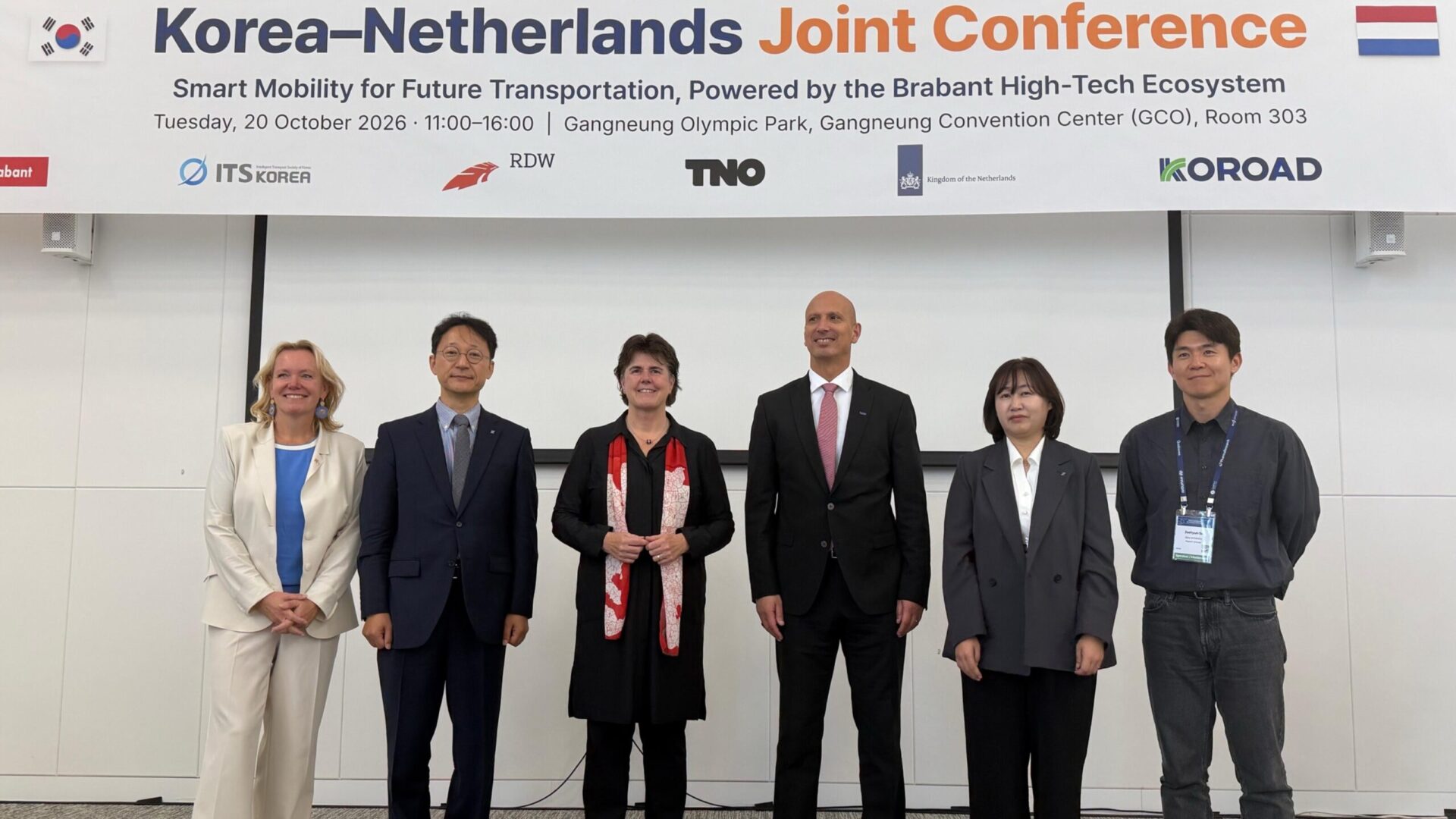
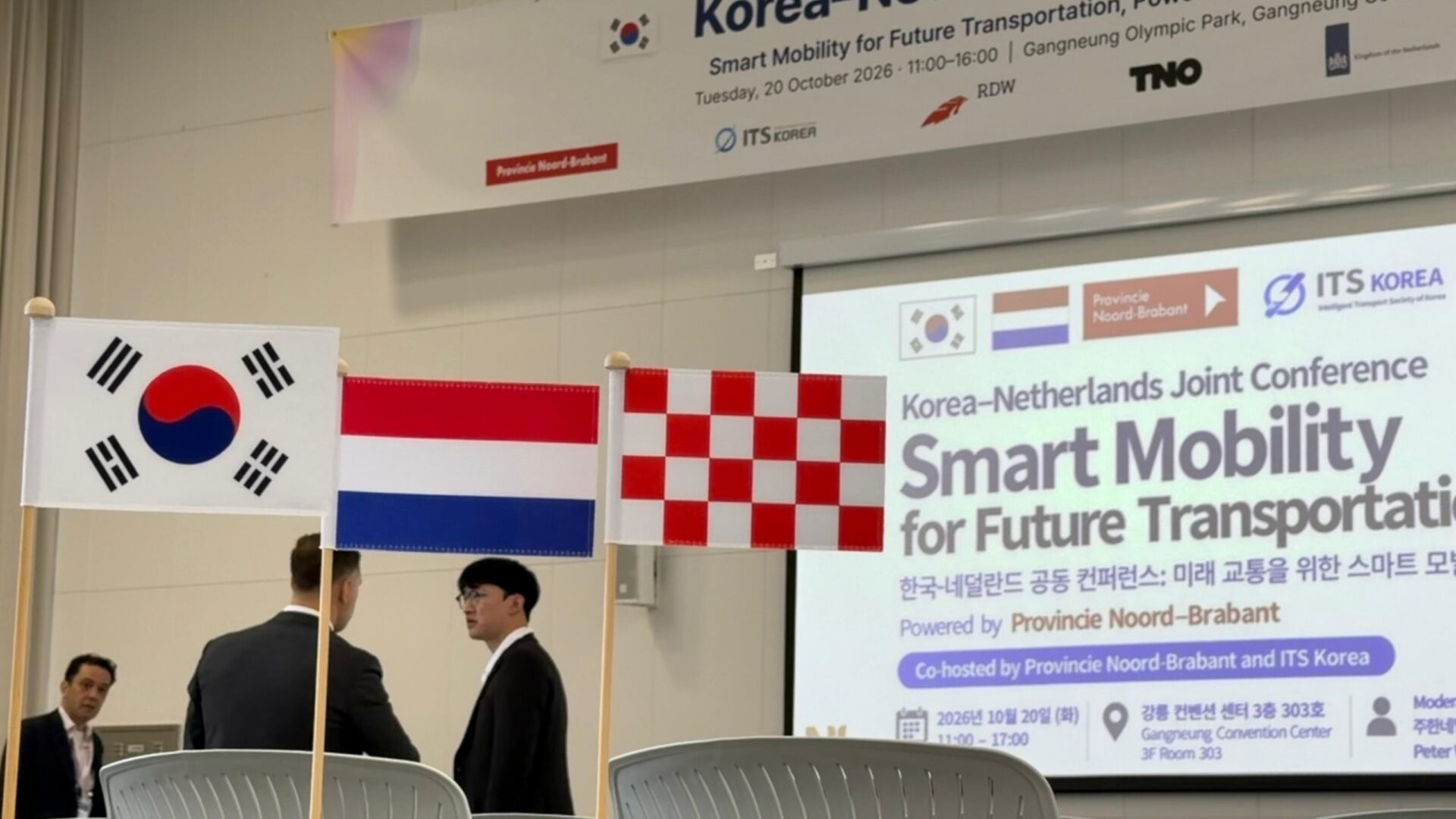
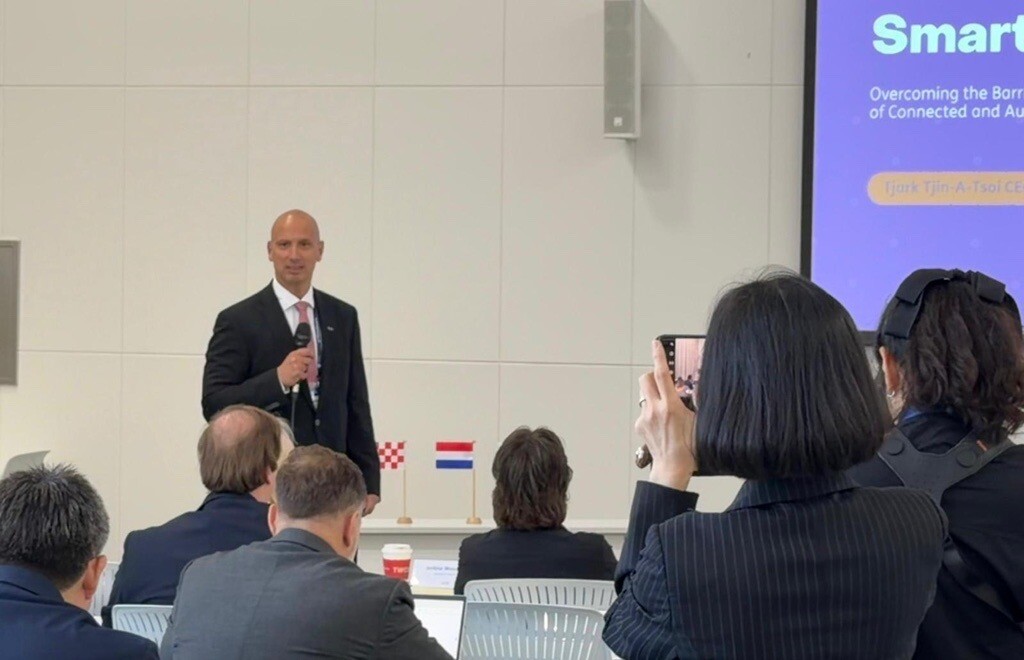
The Province of North Brabant, TNO and ITS Korea brought Korean and Dutch policymakers, researchers and industry experts together recently in Gangneung, a city on Korea’s east coast, to explore these questions at the Korea-Netherlands Joint Conference ‘Smart Mobility for Future Transportation’. The conference took place against the backdrop of the ITS World Congress 2026, and focused on developments in both countries and opportunities for cooperation.
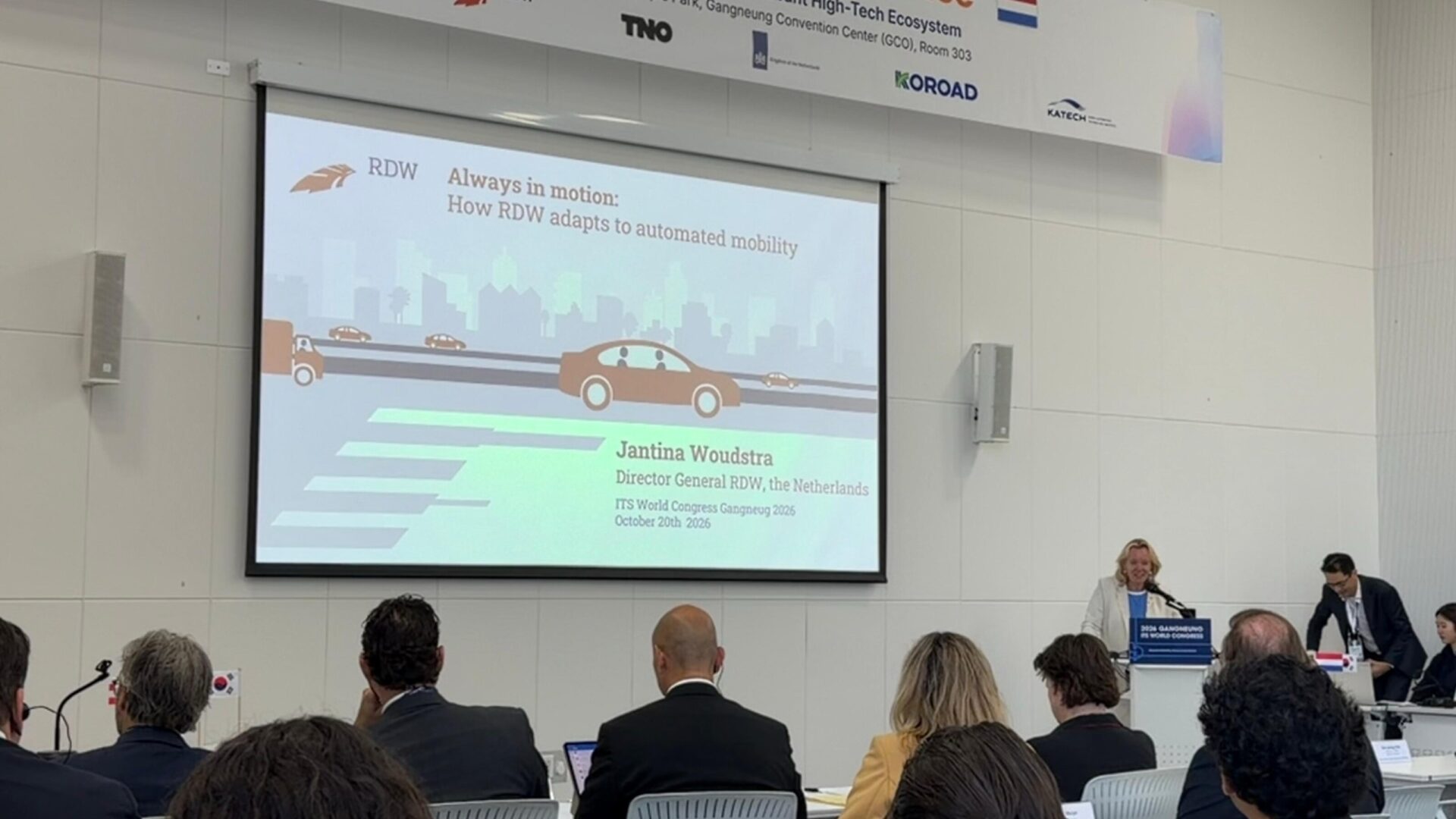
The programme covered national strategies, research and industry perspectives. Contributors included the Korea Road Traffic Authority (KOROAD), Jantina Woudstra, General Director of RDW, Ina Adema, King’s Commissioner for North Brabant, the Korea Automotive Technology Institute (KATECH), and TNO’s Olaf op den Camp.
Some clear themes emerged from the day. Peter Wijlhuizen, Senior Advisor Innovation, Technology & Science for the Netherlands Innovation Network at the Netherlands Embassy in Korea, and the moderator of the conference, highlighted some of the recurring topics as the six S’s: safety, scenarios, sharing, scaling and the similarities between the two countries.
“The other one is samenwerken, the Dutch word for cooperation,” said Peter. “Korea and the Netherlands share many of the same ambitions and challenges, and cooperation is key if we want to take smart mobility to the next level.”
Safety sat at the heart of many of the discussions. Smarter mobility can help reduce traffic accidents, while new measures and technologies must also meet demanding safety requirements. Autonomous systems require many different testing scenarios, and sharing those scenarios, along with data and expertise, can help build knowledge on both sides.
Scale also came up repeatedly. Korea and the Netherlands already run smart mobility pilots, with the challenge now to take successful approaches further. The two countries face similar issues around ageing, traffic and air pollution, creating useful common ground for cooperation.
A system that sees around the corner
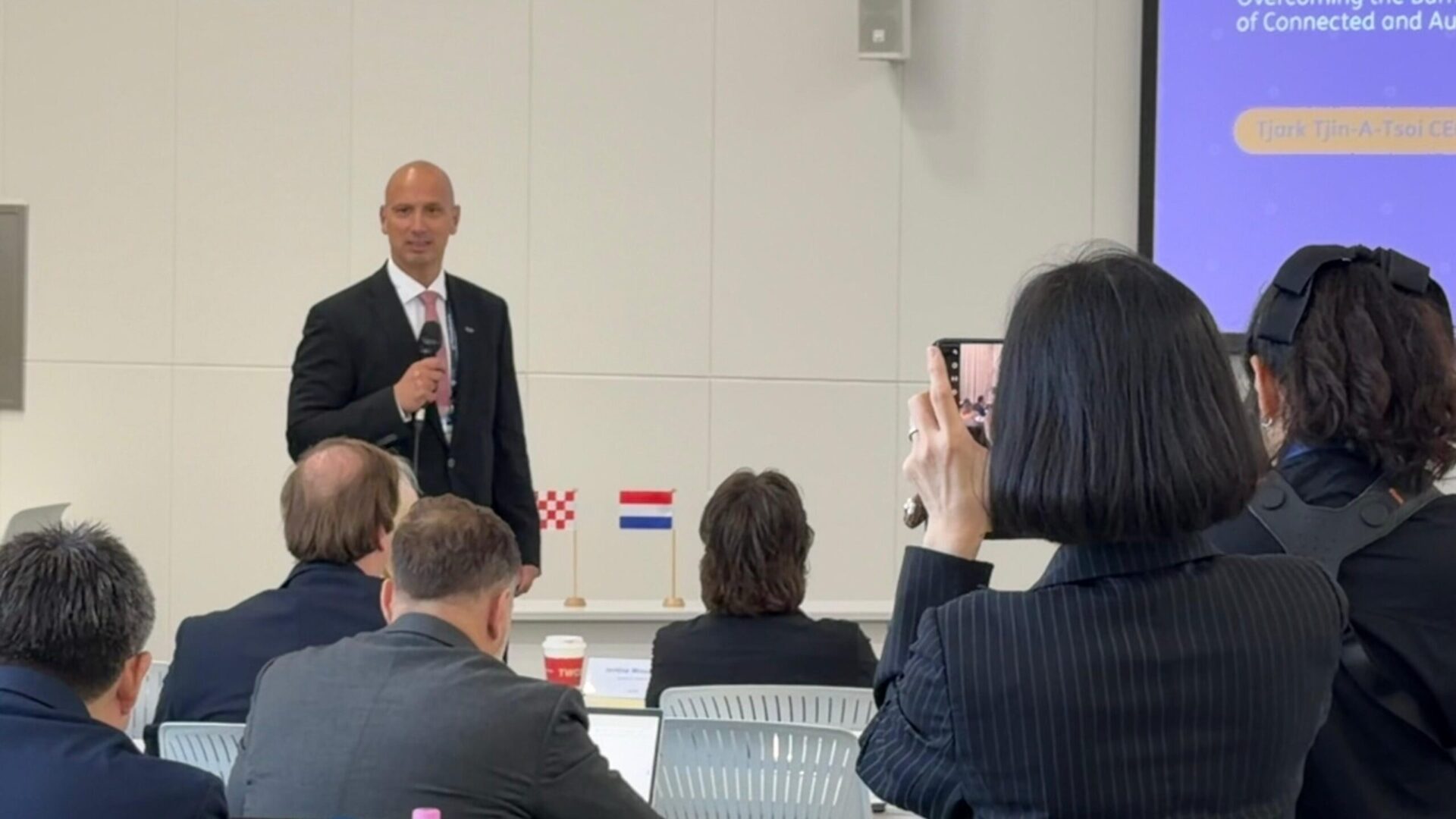
TNO brought a wider systems perspective to the conversation. Tjark Tjin-A-Tsoi, CEO of TNO, described how advances in AI, sensors, semiconductors and connectivity can help connect vehicles, public transport, logistics, infrastructure and digital networks.
Tjark illustrated the idea with an everyday traffic situation. A car approaching an intersection may fail to see a cyclist hidden behind a building. Another vehicle or roadside sensor could detect the cyclist and pass that information to the car, effectively allowing it to see around the corner.
That level of connectivity brings its own challenges. Regulators must keep pace, while connected mobility depends on supporting infrastructure and secure data exchange. AI systems also have to recognise their limitations, with safety and cybersecurity considered from the start. As Tjark put it, in mobility “almost always right is simply not good enough”.
People ultimately give these developments their purpose. Tjark gave the example of an 80-year-old who can no longer drive and gradually loses some independence. Automated mobility could help that person visit the doctor, buy groceries or see their grandchildren. “We are building the system for humans, not humans for the system,” he said.