Making autonomous public transport work for passengers
Lars Meijer is a policy advisor at the Province of North Brabant, working on public transport accessibility and autonomous public transport. Ahead of the Korea-Netherlands Joint Conference ‘Smart Mobility for Future Transportation’ in Gangneung on 20 October, he discusses North Brabant’s plans for autonomous buses, why passenger needs must remain central, and what the province can learn from Korea. At the event, hosted by the Province of North Brabant, TNO and ITS Korea, he will deliver a presentation on a European Connected, Cooperative and Automated Mobility (CCAM) outlook and the province’s vision.
Why is autonomous public transport (APT) particularly relevant for North Brabant?
One of the biggest reasons is the shortage of bus drivers that we expect over the next five to 10 years. The average age of a bus driver in the Netherlands is currently around 62 or 63. At the same time, demand for public transport is growing, particularly in the Brainport region around Eindhoven. We need to find ways to maintain and increase public transport services when there may not be enough drivers available.
Autonomous driving could be part of that solution. In North Brabant, we’ve developed Roadmap APT, which aims to make autonomous transport a standard part of our public transport system by 2035. It’s an adaptive roadmap because the technology and the market are still developing, so we need to be able to adjust as things progress.
At the moment, there are few autonomous buses available globally. There are vehicles in China carrying around 14 to 16 passengers and one from Turkey accommodating around 24. Ultimately, we hope manufacturers will develop full-size autonomous buses carrying 50 or 60 passengers, which could replace the regular buses we use today. This is the scale we need if autonomous vehicles are going to become a standard part of the public transport system.
How does the passenger experience change when there is no driver?
That is something we must think about very carefully. Of course, a bus driver does much more than simply drive the bus – they serve passengers, contribute to social safety and help people who need assistance, including wheelchair users.
If driving itself becomes automated, those functions can’t disappear. We must make sure that passengers can still get the assistance they need and that personal safety is still part of the service.
The important thing is that introducing autonomous buses shouldn’t mean compromising on quality. The aim is to increase the quality of public transport. Automation can help address the shortage of drivers, but we also need to think about how we keep that human support for passengers.
How much of this is already happening in North Brabant?
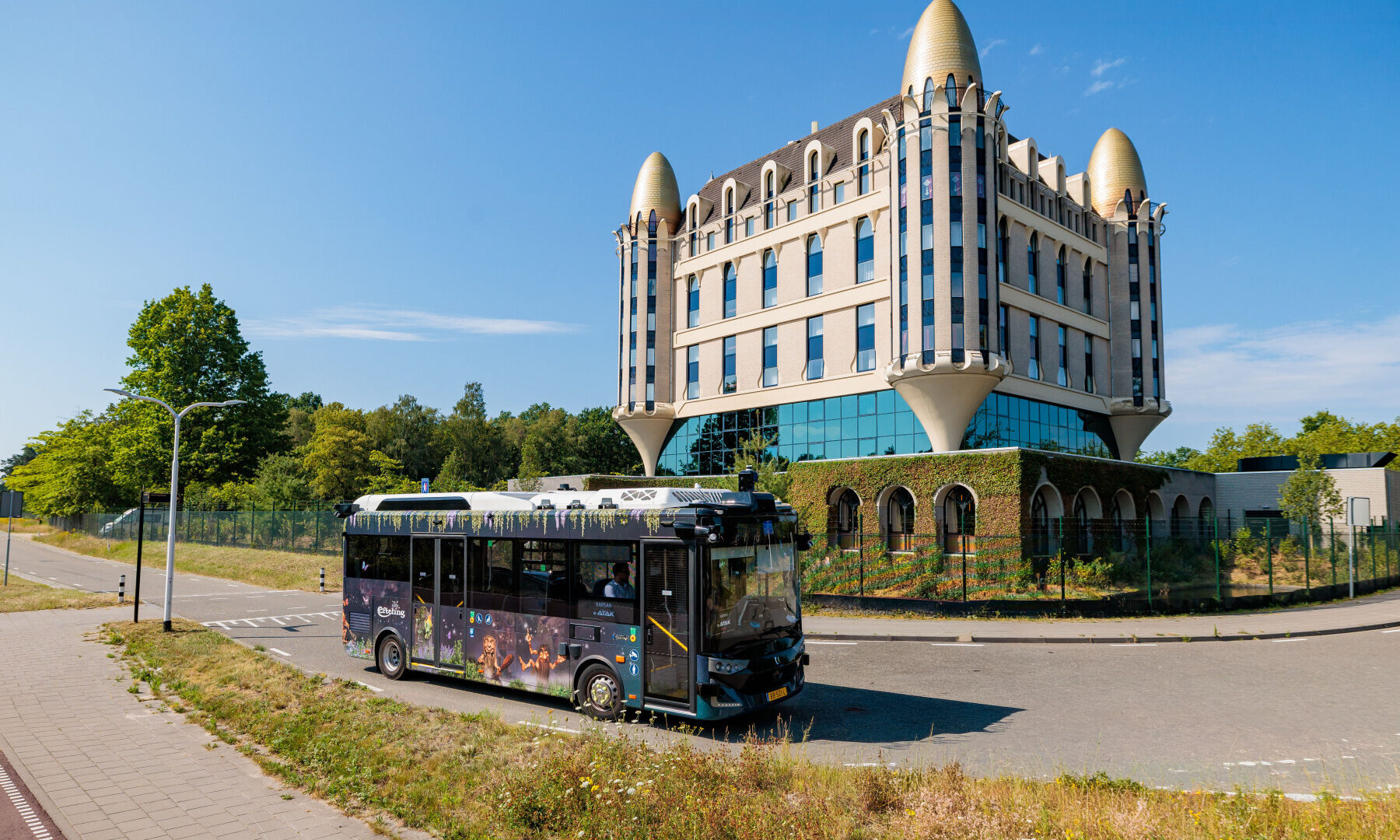
We already have some practical experience of APT. Since August 2026, we’ve been running a pilot with an autonomous bus at the Efteling theme park. It transports guests to nearby holiday parks on a route lasting around 20 to 25 minutes.
An important part of the pilot is understanding how travellers respond to the experience. We’re gathering feedback on issues such as safety and acceptance, because ultimately, it’s not enough for the technology to work. People also have to feel comfortable using it.
These developments also depend on cooperation. The province cannot fund development alone, so we work with different partners who bring their own expertise. These include transport operators, TU Eindhoven, the bus manufacturer VDL, ASML, Brainport Development and TNO.
Why is international cooperation important, and what can North Brabant learn from Korea?
Both Korea and Japan are very advanced in autonomous testing and technology, which makes it valuable for us to see what’s happening there and what we can learn from their experience.
One of the things I’m particularly interested in is the development of larger autonomous buses. As mentioned, the autonomous buses currently available are relatively small. We want to explore whether Korean manufacturers are planning to develop larger vehicles that could be suitable for public transport systems like ours.
There are other developments we can learn from too, like the growth of robotaxis. In the Netherlands, we have narrow city centres and we don’t want them to become flooded with robotaxis, creating additional congestion. So, it’s useful to see how other countries and regions are approaching this and what choices they are making. International cooperation gives us an opportunity to exchange that experience rather than developing everything independently.
Ultimately, what do you want autonomous public transport to achieve?
Autonomous transport is not a goal in itself – the goal is to improve public transport by making it more frequent, accessible and efficient.
There is an economic aspect to that as well. Bus driver salaries currently account for around 50 to 60 per cent of operational costs. If autonomous driving can help reduce operational costs, that creates opportunities to increase the frequency of services and make public transport more reliable.
But that has to go hand in hand with maintaining the aspects of the service that matter to passengers. Accessibility, passenger assistance and social safety still need to be guaranteed.
For me, the conversation about autonomous public transport should start with what we want the public transport system to deliver. Autonomous driving can help us address driver shortages, run services more frequently and provide a reliable and accessible service, making it an important part of the solution.